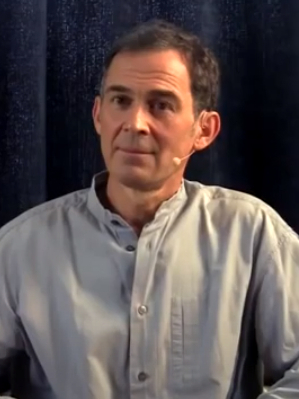
Awareness: The Unifying Thread of Existence
In the profound assertion by Rupert Spira, "The mind, the body, and the world are all known by awareness," we are invited to explore the intricate relationship between our consciousness and the myriad experiences that shape our lives. This statement serves as a reminder that awareness is not merely a passive observer but an active participant in the unfolding of our reality. Understanding this connection is essential, as it illuminates the path to deeper self-awareness and a more profound engagement with the world around us.
As we delve into this quote, we recognize that awareness is the lens through which we perceive our thoughts, sensations, and the external environment. It is the common thread that weaves together the fabric of our existence, allowing us to navigate the complexities of life with clarity and insight. By acknowledging the role of awareness, we can cultivate a more harmonious relationship with ourselves and the world, fostering a sense of unity that transcends the apparent separateness of mind, body, and environment.
The image / the metaphor
At its core, Spira's quote evokes a vivid imagery of interconnectedness. The mind, body, and world are not isolated entities; rather, they exist in a dynamic interplay, all illuminated by the light of awareness. The verbs "known" and "are" suggest an active engagement, where awareness is not a distant observer but an integral part of the experience. This imagery invites us to consider how our thoughts, physical sensations, and external realities are all facets of a singular experience, perceived through the lens of consciousness.
Diving deeper into this metaphor, we can envision awareness as a vast ocean, with the mind, body, and world as waves that rise and fall within it. Each wave is distinct, yet they all arise from the same source—the ocean of awareness. This understanding encourages us to recognize that our experiences, whether joyful or painful, are transient expressions of a deeper reality. By cultivating awareness, we can learn to navigate the waves of life with grace, understanding that they are not separate from us but rather integral to our existence.
In the speaker's tradition
Rupert Spira's teachings are rooted in the non-dual tradition, which emphasizes the fundamental unity of all existence. Concepts such as *advaita* (non-duality) and *sunyata* (emptiness) resonate deeply within this framework, suggesting that the distinctions we perceive between mind, body, and world are ultimately illusory. In this context, awareness is not merely a tool for understanding but the very essence of our being, transcending the dualistic separations that often cloud our perception.
In the *Upanishads*, a foundational text of non-dual philosophy, we find the assertion that "Tat Tvam Asi," meaning "You are That." This phrase encapsulates the essence of Spira's quote, pointing to the realization that our true nature is not confined to the mind or body but is the awareness that underlies all experience. By recognizing ourselves as this awareness, we can dissolve the boundaries that separate us from the world, fostering a sense of interconnectedness and unity with all that exists.
Living the teaching
Consider a modern scenario where this teaching can be applied: a busy day at work filled with stress and distractions. In such moments, we often find ourselves lost in thoughts about deadlines and responsibilities, feeling disconnected from our bodies and the environment. By consciously bringing awareness to our experience—taking a moment to breathe deeply and observe our thoughts without judgment—we can reconnect with the present moment. This practice not only alleviates stress but also enhances our ability to engage with our tasks more mindfully and effectively.
In the realm of relationships, the teaching of awareness can profoundly transform our interactions. Imagine a disagreement with a loved one, where emotions run high and communication breaks down. By cultivating awareness, we can step back and observe our reactions, recognizing that our feelings are not the entirety of our being but rather temporary waves within the ocean of awareness. This perspective allows us to approach the situation with compassion and understanding, fostering a deeper connection and facilitating resolution rather than conflict.
A reflection
As we contemplate the essence of Spira's quote, we are invited to reflect on the nature of our own awareness. How often do we find ourselves caught in the whirlwind of thoughts and emotions, forgetting the deeper awareness that underlies our experiences? In moments of stillness, we can ask ourselves: What is it like to simply be aware, to observe the mind, body, and world without attachment? This question serves as a gateway to deeper self-inquiry, inviting us to explore the richness of our existence through the lens of awareness.



Join the BrightStar Community
Stay connected with daily inspiration, event announcements, and community wisdom