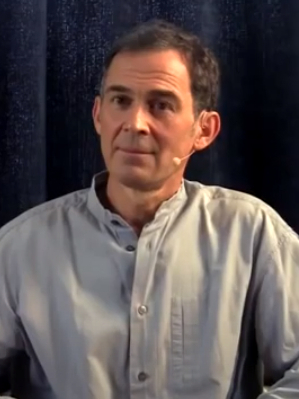
The Depth of Awareness: A Journey Inward
Rupert Spira's assertion that "to turn the attention back on awareness itself is the highest practice" invites us to explore the profound nature of our own consciousness. In a world often preoccupied with external distractions, this quote serves as a gentle reminder of the importance of introspection and self-awareness. By directing our focus inward, we can cultivate a deeper understanding of our true nature, transcending the superficial layers of thought and emotion that often cloud our perception.
This teaching emphasizes that the act of turning our attention back to awareness is not merely an intellectual exercise but a transformative practice. It beckons us to engage with the essence of our being, to recognize the stillness and clarity that lies beneath the tumult of daily life. In doing so, we can uncover a sense of peace and connection that is often obscured by the noise of our thoughts and the demands of our environment.
The image / the metaphor
At its core, Spira's quote evokes a powerful image of returning home—a home that exists within us, in the sanctuary of awareness. The verbs "turn" and "attention" suggest an active engagement, a deliberate choice to redirect our focus from the external to the internal. This movement is akin to a traveler who, after wandering through the chaos of the world, finally finds solace in the quiet of their own heart. The felt sense here is one of relief and discovery, as we realize that the answers we seek are not out there, but rather within our own consciousness.
In the speaker's tradition
Rupert Spira's teachings are deeply rooted in the non-dual tradition, which emphasizes the interconnectedness of all existence and the illusion of separation. Concepts such as *sunyata* (emptiness) and *fana* (annihilation of the self) resonate with the essence of turning our attention back to awareness. In this context, the practice of self-inquiry becomes a means of dissolving the boundaries of the ego, allowing us to experience the unity of consciousness that underlies all phenomena.
In the *Upanishads*, a foundational text of non-dual philosophy, we find the idea that "Tat Tvam Asi," or "That Thou Art," which speaks to the essential oneness of the individual self with the universal consciousness. This echoes Spira's invitation to recognize that by turning our attention inward, we are not merely engaging in a personal exploration but participating in a timeless journey toward the realization of our true nature. The teachings of Advaita Vedanta further illuminate this path, guiding us to understand that awareness is the very fabric of existence itself.
Living the teaching
Consider a modern scenario where the pressures of work and personal life create a whirlwind of stress and distraction. In such moments, the practice of turning our attention back to awareness can serve as a powerful antidote. For instance, during a hectic day filled with meetings and deadlines, one might take a brief pause to close their eyes and focus on the breath. This simple act of redirecting attention inward can create a profound shift, allowing the individual to reconnect with a sense of calm and clarity amidst the chaos.
In relationships, this teaching can also manifest in transformative ways. Imagine a moment of conflict with a loved one, where emotions run high and misunderstandings abound. By turning attention back to awareness, one can cultivate a space of presence, allowing for a deeper understanding of both oneself and the other. This practice fosters empathy and compassion, enabling individuals to respond rather than react, ultimately nurturing the relationship and promoting healing.
A reflection
As we contemplate Spira's profound insight, we are invited to consider the nature of our own awareness. What does it mean to turn our attention back on awareness itself? In moments of stillness, we can ask ourselves: How often do I find myself lost in the noise of thoughts and distractions, and how might I cultivate a practice of returning to the essence of my being? This inquiry opens the door to a deeper exploration of self, inviting us to embrace the richness of our inner landscape.



Join the BrightStar Community
Stay connected with daily inspiration, event announcements, and community wisdom