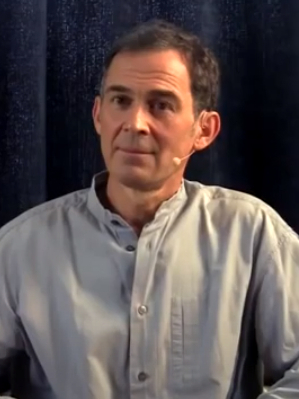
Awakening to the Essence of Reality
Rupert Spira's assertion, "Recognize who you are, and you will know what reality is," invites us to embark on a profound journey of self-discovery. At its core, this statement suggests that our understanding of reality is intrinsically linked to our recognition of our true selves. In a world often clouded by distractions and illusions, grasping this connection is not merely an intellectual exercise; it is a transformative endeavor that can reshape our experience of existence.
This quote resonates deeply within the realm of non-duality, where the exploration of self and reality intertwines. To recognize who we are is to peel away the layers of conditioning and identification that obscure our essence. In doing so, we not only unveil our true nature but also gain insight into the fabric of reality itself. This journey is essential, as it offers a pathway to liberation from the confines of a fragmented perception of self and world.
The image / the metaphor
The imagery within Spira's quote evokes a sense of awakening, as if we are being called to lift the veil that shrouds our understanding. The verb "recognize" implies an active engagement, a conscious effort to see beyond the surface. It suggests that our true identity is not something to be created or acquired but rather something to be uncovered, much like discovering a hidden treasure buried beneath layers of sand. This act of recognition is not passive; it requires a willingness to confront the illusions that have shaped our lives.
In the speaker's tradition
Rupert Spira's teachings are deeply rooted in the non-dual tradition, which emphasizes the unity of all existence and the illusion of separation. Concepts such as *advaita* (non-duality) and *sunyata* (emptiness) resonate with the essence of his message. In this context, recognizing who we are involves transcending the dualistic perceptions that create a sense of separation between self and other, subject and object. This recognition aligns with the idea of *kenosis*, or self-emptying, where one relinquishes the false identities that bind them to a limited understanding of reality.
In the *Upanishads*, ancient texts that explore the nature of consciousness, we find echoes of Spira's assertion. The phrase "Tat Tvam Asi," meaning "That Thou Art," encapsulates the essence of recognizing our true nature as inseparable from the universe. This profound realization invites us to see ourselves not as isolated entities but as integral parts of a greater whole, reinforcing the idea that understanding our identity is key to grasping the nature of reality.
Living the teaching
Consider a modern scenario where this teaching can be applied: a person grappling with feelings of inadequacy in their professional life. They may identify solely with their job title or the opinions of others, leading to a distorted sense of self. By recognizing their true essence beyond these external labels, they can shift their perspective, understanding that their worth is not contingent upon societal validation. This recognition can liberate them from the pressures of comparison and competition, allowing them to engage with their work from a place of authenticity and creativity.
In relationships, the teaching of recognizing who we are can also play a transformative role. Imagine a couple facing conflict, each entrenched in their perspectives, feeling misunderstood and disconnected. By turning inward and recognizing their shared essence, they can transcend the surface-level disagreements and approach each other with compassion and empathy. This shift from a dualistic viewpoint to one of unity fosters deeper connections and a more profound understanding of one another, illustrating how the recognition of self can illuminate the path to harmonious relationships.
A reflection
As we contemplate Spira's profound words, we are invited to reflect on our own journey of self-discovery. What layers of identity have you constructed that may obscure your true essence? In recognizing who you are beyond these layers, how might your understanding of reality shift? This contemplation can serve as a guiding light, illuminating the path toward a deeper connection with both self and the world around you.



Join the BrightStar Community
Stay connected with daily inspiration, event announcements, and community wisdom